Why this isn't a normal ticket
The climb is closed — for good
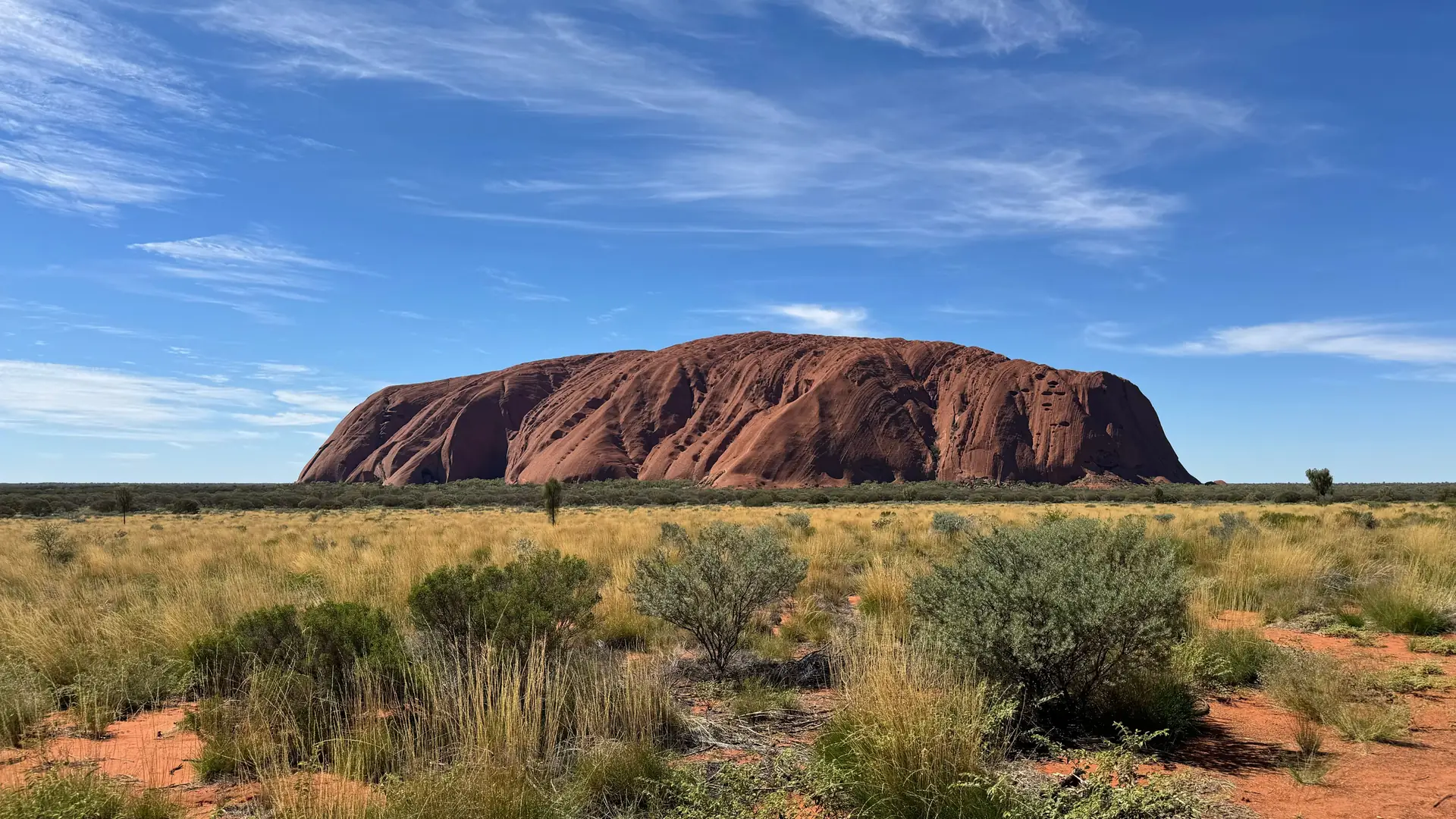
For decades, tourists climbed Uluru; that ended permanently in October 2019, when the climb was closed out of respect for the Anangu Traditional Owners, who had long asked visitors not to. There is no review and no exemption. Visiting Uluru today means experiencing it from around and below — on foot, at a distance, and through Anangu culture — rather than from the top.
The experience is guided and time-of-day driven
What replaces the climb is arguably richer: the roughly 10 km base walk past waterholes and ancient rock art, the daily spectacle of the rock changing colour at sunrise and sunset, Anangu-led cultural walks, and the Field of Light installation after dark. Most of these are run by licensed operators, and the marquee moments happen at very specific times — which is why they're booked, not improvised.
It's remote, and it's a national park
Uluru sits deep in the Red Centre — most visitors fly into the small Ayers Rock Airport rather than drive the long distances — and everything happens inside Uluru-Kata Tjuta National Park, which requires a multi-day entry pass for all adult visitors. The remoteness and the pass are part of planning a visit, not afterthoughts.
The four ways to experience Uluru
With the climb closed, the experience is about walking, watching the colours change, and Anangu culture. Here are the four that define a visit.
| Experience | What it is | When |
|---|---|---|
| Base Walk | The ~10 km loop around Uluru past waterholes and rock art | Cooler months; start early |
| Sunrise & sunset | Watching the rock blaze red as the light changes | Every day — the classic moment |
| Anangu cultural tour | Guided walks sharing Tjukurpa stories, art and bush foods | Operator-led, year-round |
| Field of Light | A vast after-dark solar-light art installation in the desert | After sunset; ticketed separately |
Experiences, culture & visiting guides
The change that defines the visit
Can you climb Uluru? No — here's why, and what it means
The climb closed in 2019, and it reshaped how everyone experiences the rock.
Read the guide →What to book
The best ways to experience Uluru
Base walk, sunrise, culture and light — the four experiences that define a visit.
Read the guide →Logistics
Uluru park pass and getting there
It's a remote national park with an entry pass — here's the practical side.
Read the guide →When to go
The best time to visit Uluru
The desert swings between mild winters and fierce summers — here's how to time it.
Read the guide →The marquee moments
Uluru sunrise, sunset and the Field of Light
The three time-of-day experiences worth planning your whole trip around.
Read the guide →Visiting respectfully
Respecting Uluru — the Anangu and the sacred sites
Uluru is a living cultural site — a little understanding makes the visit richer.
Read the guide →Questions people actually ask
Can you still climb Uluru?
No — climbing Uluru has been permanently closed since 26 October 2019, at the request of the Anangu Traditional Owners, for whom the rock is sacred. There is no exemption or reopening planned. The former climb route is closed, and visiting is now about the base walk, the sunrise and sunset viewing areas, and Anangu-led cultural experiences.
What do you actually do at Uluru now?
The signature experiences are the roughly 10 km base walk around the rock (or shorter sections of it), watching Uluru change colour from the sunrise and sunset viewing platforms, Anangu cultural tours that share the stories and art of the site, and the Field of Light installation after dark. Kata Tjuta (the Olgas) nearby is a superb add-on.
Do you need a pass to visit Uluru?
Yes — Uluru sits within Uluru-Kata Tjuta National Park, and all adult visitors need a multi-day park pass, bought online in advance or on arrival. It's a Parks Australia charge, separate from any tour, and it covers your entries over consecutive days. Under-18s are generally free.
How do you get to Uluru?
Uluru is remote, in the heart of Australia's Red Centre. Most visitors fly into the small Ayers Rock (Connellan) Airport, a short transfer from the resort area at Yulara; others drive the long distances from Alice Springs (about 4.5 hours). Because it's so remote, many book tours that include transfers and the logistics.
What's the best time to visit Uluru?
The cooler months, roughly May to September, are the most comfortable, with mild days ideal for the base walk and clear nights for stargazing and the Field of Light. Summer (December to February) brings extreme heat, and walks are often curtailed by mid-morning for safety — so most visitors aim for autumn to spring.
What is the Field of Light at Uluru?
The Field of Light is a large-scale art installation by artist Bruce Munro — tens of thousands of solar-powered glass spheres that glow across the desert after dark, with Uluru as a silhouette backdrop. It's a ticketed experience, often combined with a sunset viewing or dinner, and it's one of the most popular things to book at Uluru.
- Cancellation terms upfront Every listing states its full policy before you pay
- Secure checkout You book and pay on Viator's protected platform
- No markup from us You pay Viator's own price — we earn a commission, not a fee
- Independent guide We research the options and link to current listings; we don't sell the tickets