Season, heat and the practical bits
Best time to visit Uluru and how to plan
May to September is the comfortable season. Heat, flies, cold nights, packing, driving times and photo rules, with the dinner evening in mind.
See the dinner and other Uluru evenings on GetYourGuide ↗Quick answer
The most comfortable months for Uluru are May to September, when daytime temperatures are usually pleasant and there is very little rain. October to March can be extremely hot, with storms and flies, and Parks Australia strongly recommends not walking after late morning in summer. Winter nights are cold, so pack warm layers for an evening dinner. The park is open every day of the year.
The five Anangu seasons at Uluru
| Season | Usual months | What to expect |
|---|---|---|
| Itjanu/inuntji | Jan to Mar | Rain and storms |
| Wanitjunkupai | Apr to May | Cold weather begins |
| Wari | Late May to Jul | Cold; some frosty mornings |
| Piriyakutu | Aug to Oct | Warm wind; wildflowers |
| Mai wiyaringkupai | Late Oct to Dec | Hottest; storms, little rain |
Why May to September
Parks Australia says the best time to come is May to September, when daytime temperatures are usually comfortable and there is very little rain. The cool weather makes walking safer and more pleasant. Nights can be very cold in winter, so bring warm clothing. August and September are usually the best months for wildflowers. The park is open every day of the year, so there is no closed season to plan around, although individual tracks and sites can close for heat or repairs. If you can only choose one window, aim for the cooler months, and book the evening tour early for the dates you want.
Five seasons, not four
The Anangu recognise five seasons in the park. Parks Australia notes that they follow the feel of the weather and the food that is available rather than exact dates, so the months in the table are the usual ones. The middle of the year brings cold, clear weather and some morning frosts. The warm months bring storms. After good rain the waterholes fill and Uluru's waterfalls can start to flow, which most visitors never see because it takes rain. Parks Australia says the hot weather brings the storms and rain that fill the waterholes, which is why a wet summer can look so different from a dry winter.
The hot months, October to March
From October to March the park can get extremely hot. Parks Australia advises walking only in the cooler parts of the day, and in summer it strongly recommends not walking after late morning. Some walking tracks close from late morning once the daily maximum reaches a set temperature, and the park's daily access report shows what is open. Carry at least one litre of water per person for each hour of walking. Summer also brings large numbers of flies, so a head net is worth having, and you can buy one when you arrive.
What to wear and bring
Parks Australia's packing list for walking covers sturdy shoes, a broad-brimmed hat, sunscreen, sunglasses, long lightweight clothing, insect repellent and a head net. For evenings and early starts, add warm layers, with a beanie and gloves in winter. For the barbecue dinner, the operator lists enclosed walking shoes, a water bottle and warm layers in the cooler months. Bring a camera, and read the photo rules below first. Binoculars and insect repellent are on the park's list too.
How the dinner evening runs
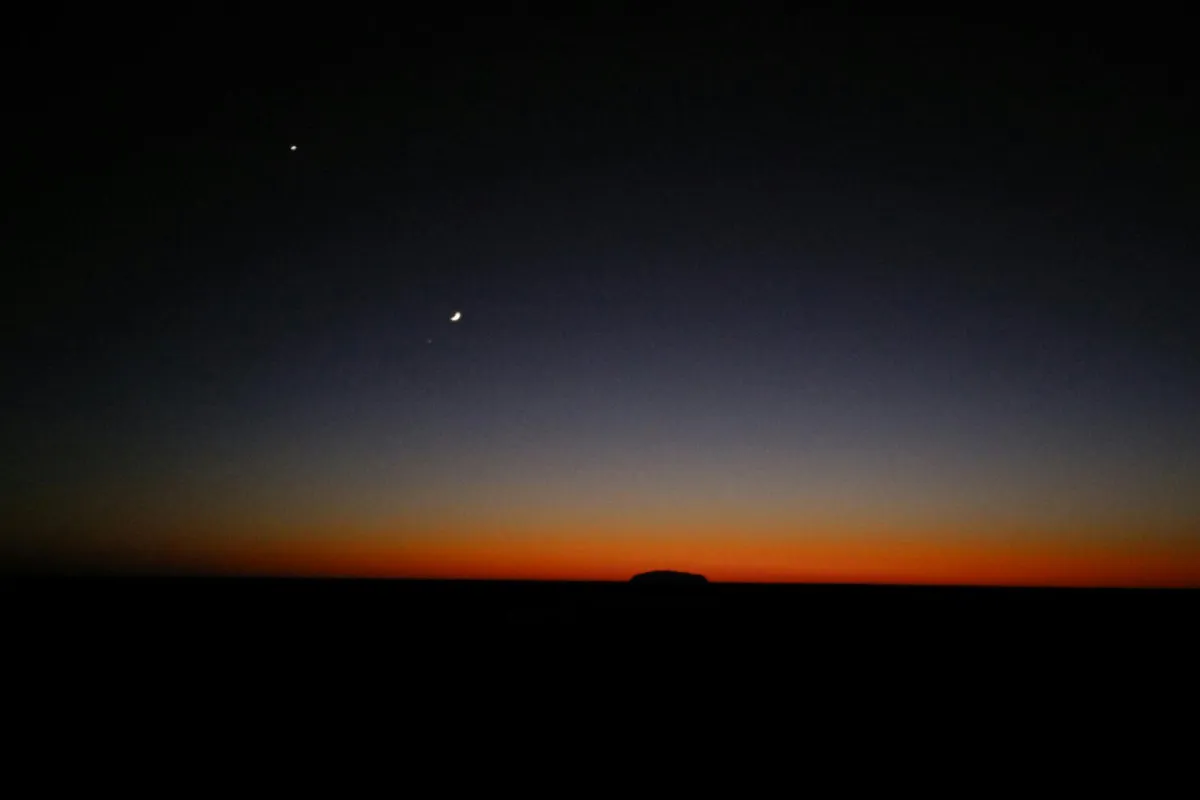
Hotel pickup is included, and the pickup time changes through the year with sunset. The operator asks you to reconfirm your exact time with its reservations team 24 to 48 hours before, and to be at your pickup point 10 minutes early. The tour leaves before sunset. The booking page gives its length as three hours, while the operator's own page has it returning about two and a half hours after sunset, so keep the late evening free. The constellation talk with a spotlight happens only if the sky is clear, which is why the booking page says the stargazing is weather permitting. Cloud can change what you see, so treat the sky as a bonus, not a promise.
Getting there and around
Parks Australia gives approximate driving times of 20 minutes from Ayers Rock Resort to Uluru, 45 minutes to Kata Tjuta and 10 minutes to the airport. All roads in the park are sealed, so an ordinary car is fine. There are no taxis or public transport, and rental cars at Yulara are limited, so book them a few weeks ahead. If you'd rather not drive, tours and a hop-on hop-off bus pass cover the main sites. The resort runs a free shuttle between its accommodation and the Yulara town square.
Children, access and language
Parks Australia lists a minimum age of 9 for the AAT Kings barbecue. Most of the park's walking tracks have wheelchair-accessible sections, and the booking page lists the dinner as wheelchair accessible, though you should ask the operator about the dinner site. The dinner guide speaks English. Inside the park, the Cultural Centre's displays are multilingual, and Parks Australia offers downloadable visitor guides. For help with an itinerary, the Cultural Centre staff can advise by phone, and Parks Australia publishes suggested half-day, one-day, two-day and three-day itineraries on its site.
The night sky without a tour
If you want the stars on your own, note that Parks Australia says all visitors must exit the park by closing time, so night-sky photos have to be taken from outside it. It suggests an elevated lookout on a sand dune beside the Lasseter Highway, about halfway between the park entry station and Ayers Rock Resort, and says other lookouts around the resort are good alternatives. Uluru Astro Tours, a separate operator, is listed by Parks Australia as having special access to the park at night.
Photos and respect on the day
Photographing culturally sensitive sites is prohibited, and those sites are signed in the park. Near them you can photograph plants, animals and people with permission, but avoid capturing rock formations. For the north-east face, the side most often seen from the resort, Anangu ask photographers to take only wide shots from a distance. Always ask before photographing Anangu. Drones are not allowed in the park, and penalties apply.
Read next: Respecting Uluru — the Anangu and the sacred sites
A day around the evening
Parks Australia suggests starting a visit at the Cultural Centre, where the Tjukurpa Tunnel is recommended as your first experience of the park, and allowing at least two hours to see the Cultural Centre properly. For the base walk, it recommends starting from the Mala carpark in the early morning, going clockwise, and says the whole walk takes about three and a half hours on foot. The ranger-guided Mala walk is free. That leaves the evening free for the dinner.
Who this isn't for
If you want to be at the rock at sunrise or walk the base track, the dinner tour isn't that, because it is an evening of food and sky. If you visit between October and March, don't plan a long walk after late morning. And if you want to hear from the Traditional Owners directly, Parks Australia lists separate cultural tours led with Anangu guides.
Frequently asked questions
When is the best time to visit Uluru?
May to September, according to Parks Australia, when daytime temperatures are usually comfortable and there is very little rain. Nights can be very cold. October to March can be extremely hot.
Is Uluru open all year?
Yes. The park is open every day of the year, with opening and closing times that change by month. Individual tracks can close for heat or repairs, and the park's daily access report shows their status.
Is it too hot to visit in summer?
It can be. Parks Australia strongly recommends not walking after late morning in summer. Plan walks for early in the day and carry plenty of water.
What should I wear to the dinner?
Enclosed walking shoes and warm layers in the cooler months, as the operator suggests, plus a water bottle. Winter nights can be very cold, so add a beanie and gloves.
How do I get around Uluru without a car?
There are no taxis or public transport, but you can join a tour or buy a hop-on hop-off bus pass. The resort runs a free shuttle between its accommodation and the Yulara town square.
Can I photograph Uluru?
Yes, except at signed culturally sensitive sites, where photos are prohibited. For the north-east face, take only wide shots from a distance. Drones are banned.
Sources